


The Week in the Faroe Islands
- Karsen Odle

- Dec 3, 2025
- 12 min read
Original Post Date: June 22, 2019
Original Post Location: TÓRSHAVN, STREYMOY, FAROE ISLANDS
To briefly inform you about the Faroe Islands, here are some facts that I learned while I was there. On the islands there are approximately 180,000 sheep, but this nearly doubles every year during the summer when the mama sheep have lambs. This means at times there are over 300,000 sheep, compared to the 50,000 people that live there. The islands are farther north than Copenhagen is, so the sun rose at 3:30 AM and set at 11:30 PM. Although even after the sun set it was still light out because it never got low enough for it to become pitch black outside. Along with the sun setting later, the sunsets would last for at least a couple hours. The Faroe Islands are so safe that nobody locks their door, and sometimes when you buy a house, it doesn’t even come with a key, because you will never use it. There are a lot of tunnels connecting the eighteen islands. Some go through the mountains and others go under the ocean. They are currently working on building a tunnel under the water that will connect three towns and have a round-a-bout in the middle.
I am convinced that while we were there, the Faroe Islands were just showing off. I was continuously in awe of how beautiful and majestic everything was, and the weather was way nicer than we thought it was going to be. The sun came out almost every day, and we only got rained on twice.
We accomplished a lot while in the islands, so this entry is kind of long, but I will try to keep it interesting!
6.17.19
This was a full day. Our flight was leaving Copenhagen at 6:15 AM and we needed to meet at the airport at 4:30 AM. This meant that I needed to leave my apartment at 4:00 AM and wake up by 3:00 AM. And being the young person that I am, I did not go to bed until midnight the night before. I was able to wake up on time and make it to the airport with out any problems. I met my group, completed the self-check-in, and made it through security within 30 minutes. When we boarded our flight at 5:45 AM we realized that our flight was only about half full, so everyone spread out to have their own space. This flight was two hours long, and we changed time zones, so we landed in the islands at 7:20 AM. The airport in the islands is the second smallest one I have ever been to. There were only two gates, the runway ended at a lake, and we exited the plane onto the runway. As we exited the airport, we were met by our bus driver who led us out to a massive coach bus, which ended up being nicer than any bus I have been on. Oh, and I forgot to mention, there were eleven of us total on this trip, and we were riding around in this bus that could hold over 50 people down these tiny, sometimes one way, roads weaving in and out of the mountains and tunnels that cut through the islands. Our first stop was the little town of Gásadular. This town is located on the island of Vágar along the fjord that we flew through to land at the airport. This is also where one of the most well-known images of the Faroe Islands can be taken at. Before we headed into the town, we hiked around the edges of the island to get good views of the waterfall and the surrounding valley. We were supposed to meet at the Gásadalsgardur Slaughterhouse Café for carrot cake at 9:00 but we were finished hiking by 8:30 so they gave us the remaining 30 minutes to explore the town, this tiny town that consisted of about 10 buildings. Needless to say, this did not take us very long, and thankfully some of the local sheep dogs found us and let us play with them. These dogs were super sweet and loved us as soon as we started petting them. One of the dogs brought us a small rock and turns out they are really good at playing fetch with a rock. Eight times out of ten they would catch it in their mouth if you threw it high enough. The dogs easily passed our time, and then we headed into the café to eat cake, drink coffee, and warm up from the cold and rain. This café follows its name and once a year, in October, they clean everything out and the town uses it to slaughter their sheep. They make sure to scrub and power wash everything though before they move the furniture back in and start using it as a café again. The building that the café is in was originally built to be a slaughterhouse but transformed into a part time café to support the tourists. After finishing our cake and talking with the owner we got back on the bus and rode to the town of Tórshavn, which roughly translates to Thor’s Harbor. The Faroe Islands are very mystical, and because of this a lot of stories such as Odin and Thor originate here. There were even a couple scenes in the movie Avengers: Infinity War that used the landscape from the islands. Once we arrived in the town, we ate lunch at Umami. After lunch we rode the bus to a small port on the other side of Tórshavn to meet with Agnes Mols Mortensen, a seaweed harvester, to learn about seaweed and help her harvest some. It also happened that she was being filmed that day by a German film crew making a documentary on seaweed, and we all agreed to be in it. In a year or so you can look for us in the new seaweed documentary, which has yet to be titled. In order to harvest the seaweed, we had to climb down the rocks that made up a giant wave breaker so we could reach the certain species of seaweed that we were looking for. We were able to harvest seaweed for an hour, taking a break every once and a while to eat some straight from the ocean, all the while being filmed. Once we gathered all of the seaweed that Agnes needed, we climbed back up to a grassy patch where we sat for a while and chatted about seaweed and the various products that her company produces as well as the goals that she has for the seaweed industry. We then headed to our hotel where we were to meet a famous Faroese chef, Leif Sørensen. During his presentation we learned about the New Nordic Cuisine movement as well as some of the new food that he is trying to produce. For example, dried fish chips that he makes out of fermented fish and grains. We also tried fermented whale meat and blubber, dried lamb, and fermented fish. Out of all of it, I only liked the dried fish chips. When the meeting was over, that was the end of our scheduled day, so we decided to make the 20-minute decent down to the town center to eat dinner and look through some of the shops. Most places ended up being closed, and the only place that wanted to accommodate 8 people was a mediocre pizza place, so that is what we had for dinner. After we finished eating, we made the hike back up to the hotel, which ended up being a lot harder than we thought it was going to be.


6.18.19
We started the day off with breakfast at the hotel, then we headed to one of the neighboring islands to the town of Søldarfjøður for food with a local couple who spends their time hosting visitors and giving them an authentic Faroese experience. We met them at their house called Garðahusið, which was built in 1868, where they had a beautiful table set up for us with tea, coffee, and snacks. While we ate, Jákup told us his family’s story and how he and his wife came to live in this house, which has remained in his family since it was built. Something that we learned from him was that back in the day each family had their own dairy cow, and this cow usually lived in a room in the middle of the house to provide heat for the whole family. This couple hosts more than 3,000 visitors per year. Once we had finished eating and had walked through the wife’s beautiful garden, we headed to a nearby town to meet our guide for our hike over one of the mountains from the town of Leirvík to Gøta. His name is Pol Sundskarð. He is 62 and very into extreme sports. He has hiked to the top of every peak on the islands (there are 304 of them) and he also runs great distances, sometimes 500km (approx. 300 miles) or more at a time. It took us approximately two and a half hours to hike over to the other side. These mountains are nothing like the 14’ers in Colorado, although they are still steep and cliff like. Almost as if you cut the tops of mountains off and sat them down in the ocean. Once we got to the top the fog had rolled in so we were basically sitting in a cloud and could not see much. As we made our decent down the other side the clouds slowly started to clear, and we were greeted with amazing views. When we reached the bottom, we walked to a farmhouse where we ate a traditional Faroese dinner. This consisted of lamb, baked in the oven for 7 hours, along with potatoes and carrots. The food was amazing, and in the Faroes hosting people is a big deal, so they will continue to bring out food until you cannot eat any more, and so that is what we did. We also had a rhubarb compote for dessert. After we had finished eating, and our host had told us a few stories about her farm called Varmakeldugarðurin, we went to the main location of her farm and she gave us a tour. Once we finished the tour we headed back to the hotel for the night. We spent this day on the island of Eysturoy.


6.19.19
This was the day that I did an Instagram takeover for the DISAbroad Instagram account.

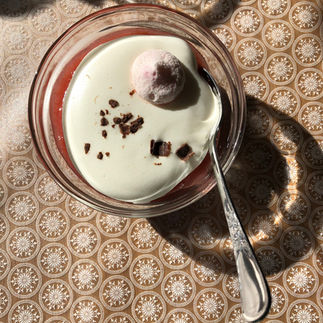
Our hotel was on a hill side overlooking the town and while we were eating breakfast, we watched the fog roll back across the city like a curtain. Our first stop of the day was the 2 Michelin Star Restaurant, KOKS. The restaurant is so remote that you cannot drive there yourself, so you have to be picked up and driven to the restaurant by one of the employees in an old Range Rover. While at KOKS we received the tasting menu. This was an 11-course meal consisting mainly of seafood. I did eat everything, even if I didn’t enjoy it, because I was not about to pass up an opportunity to eat at a restaurant that has two Michelin Stars. Our courses included; Scallop with Water Crest and Toasted Chips, Mahogany Clam with steamed Deep Sea Red Crab, Horse Mussel served with broccoli, elderflower, and beach herbs, a Purée of Smoked Cod with Pickled Root Vegetables and salted Whale Blubber, Salted Cod in a Parsley Garlic Sauce, Fermented Leg of Lamb with Dried mushrooms and pickled berries, a Savory Cheese Cookie with Fermented Lamb and Fish Cream, Smoked Whale Heart seasoned with Christmas flavors, Monk Fish roasted with garlic and served with beef broth and brown butter, and lastly Rhubarb with Grass Jelly. That is even the condensed list of the food we ate, with out going into detail of all the ingredients in each dish. The food and ingredients used at KOKS are all local and incredibly fresh, usually picked or caught just hours before it is cooked. After we left KOKS we went on a boat tour to the bird cliffs to look for Puffins. With the help of the captain we were able to spot quite a few of them. When we got back to Vestmanna at the end of the boat tour we boarded the bus and headed back to the hotel. We were all exhausted and didn’t feel like hiking back down to the town for dinner, so we called the pizza place and ordered 9 pizzas to be delivered to the hotel.
6.20.19
We started bright and early with a taxi ride to the dock in order to catch the ferry to the town of Nólsoy where we will be spending our day. We met with one of the owners of Gimburlombini, a café where they cook with food grown from their garden and work to incorporate locals as well as visitors in the process. We learned all about the edible plants that grow on the islands and how to cook them. One of the plants we ate had leaves that tasted exactly like a cucumber. After our quick tour of the small town we went to one of the nettle patches to pick the nettles to make nettle-pizza. While exploring the various plants we learned that the majority of the edible plants that exist on the islands were brought over by Vikings, and you can tell where their settlements were based on where you find large clusters of the edible plants. We picked nettle until it started to rain and so we went back to the café to start making the pizzas. We used homemade dough and cooked the pizzas on the grill with olive oil, garlic, feta cheese, and the nettles, which turned out to be similar to spinach or kale. After eating our pizza we went out to their gardens to pull weeds. At the café they will give anyone who works in their garden for an hour a free waffle and coffee, so we followed the rules and did our work in order to receive our waffles. The waffles here are not as light and fluffy as the ones in America, and partially resemble a cookie. After we had our fill of waffles, we still had thirty minutes until the ferry arrived to take us back to Tórshavn so we ended up playing a quick game of soccer while we waited for it. Once back in Tórshavn we had three hours to hang out and explore. Hannah, Shannon, and I went to a couple of stores to pick up some last-minute souvenirs and then we chilled in the square and enjoyed the sun that had decided to come out for the day. We then met with Johannes Jensen, the owner and entrepreneur of various restaurants around the Faroe Islands. He bought us all a round of drinks and then sat with us for over an hour to answer our questions and tell us stories about his life and restaurant endeavors. After our meeting we ate at one of his restaurants called Barbara, which is a seafood restaurant, and this was our last dinner in the Faroe Islands. After dinner we then made the trek back up to our hotel in the rain and packed to get ready to leave the islands the next day.


6.21.19
With this being our last day on the islands we only had one thing on the schedule before we flew back to Copenhagen. After we ate breakfast, we headed off to the other side of the island to the town of Kirkjubøargarður to tour some buildings that have been there since the late 1000’s. This was also the first day that we experienced true Faroese weather. It was chilly and rainy for the majority of the day. The farmer that we spoke with lived in the oldest house in the settlement, which his family has owned since 1537, and showed us around while he told us all the stories that went along with each building. He talked about landslides and bad storms that, through the years, have shaped the landscape into what it is today.

After giving us a thorough tour, we ended at his house where his wife had prepared a “light” lunch for us. Again, we were able to eat until we were full. We then boarded the bus to head to the airport. Since this airport is very small, only two gates, we were able to leave on time and made it back to Copenhagen by 5:30 PM. Once I got back to my apartment from the airport, I was starving so I hoped on my bike to go find an affordable place to eat. Today was also the start of the Midsummer’s Eve celebrations so I went to sit along the canal to watch the sunset and listen to the music that was pouring out of various shops and restaurants and enjoy being back in Copenhagen. When I got home Natalie and I shared stories about our trips and then met up with a group of friends so we could catch up.
Weekly Overview – Faroe Islands:
1. Places Visited
Town of Gásadular
The Gásadalsgardur Slaughterhouse Café
Island of Vágar
Town of Tórshavn
Town of Søldarfjøður
The Garðahusið
Town of Leirvík
Town of Gøta
The Varmakeldugarðurin Farm
Island of Eysturoy
KOKS
The town of Vestmanna
The town of Nólsoy
The Gimburlombini café
The Tarv
Barbara
The town of Kirkjubøargarður
The island of Streymoy
2. Favorite Moment
Hiking over a mountain and experiencing the nature of the Faroe Islands firsthand.
3. The Best Food I Ate
The baked lamb with potatoes and carrots from the Varmakeldugarðurin Farm.
4. A Helpful Tip
If you are wanting to hike, make sure to hire a personal guide because the trails are not marked, and it is very easy to get lost.
5. The Best View
Standing on a ledge overlooking the town of Gásadular with a waterfall flowing to the ocean in the foreground.


Comments